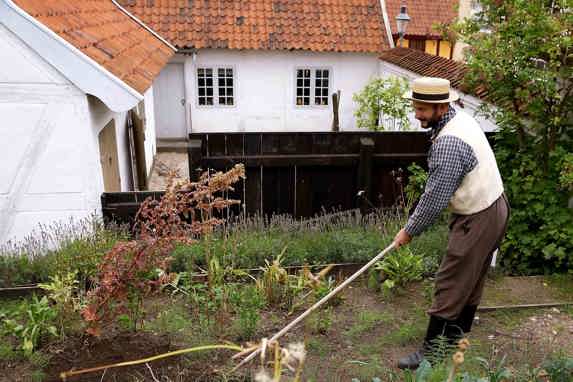
By establishing a small kitchen garden, townspeople could supplement their household diet with home-grown vegetables.
Human fertiliser
Fertiliser
Behind the textile mill lies a small kitchen garden. To help plants grow, manure from animals could be used as fertiliser. However, human waste from privies could also be used. Latrine waste was used in Danish kitchen gardens well into the twentieth century.
A tradable commodity
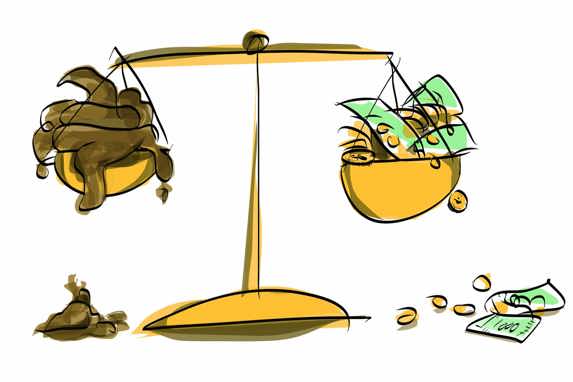
When night soil collection was organised at the end of the nineteenth century, sanitation companies could make money by selling the waste they collected from towns. In 1872, for example, a mixture of latrine waste and lime was sold in Odense, imported from Copenhagen. Latrine waste was used for almost all types of crops in the early twentieth century. However, it was not always the best form of fertiliser, as it has a relatively high nitrogen content, which causes plants to grow quickly. For this reason, it was particularly suitable for crops such as rhubarb, which benefit from forced growth.
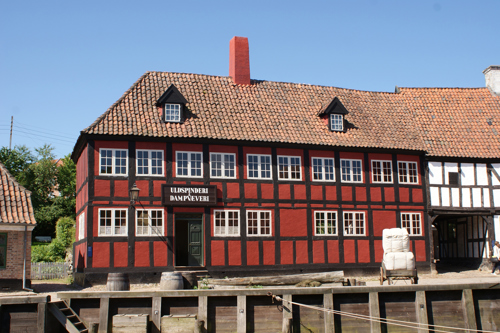
The Textile Mill