Buy ticket

Behind the heart-shaped opening in the door, a simple wooden bench conceals a brick-lined pit.


The night belongs to the Nightman

The Nightman empties the privy

In the rear building of Eilschou’s Almhouses is the house’s privy. Beneath the wooden seat, you could look down into the brick-lined pit where urine and faeces accumulated. Until the mid-nineteenth century, it was the nightman’s job to empty pits such as this one.


Dishonest Work

Nightmen and knackers are known from the Middle Ages as assistants to the executioner. Over time, it also became the nightmen’s responsibility to empty latrines and remove the carcasses of animals that had died of natural causes, as well as refuse from the streets. This work was regarded as “dishonourable”, and no one else wanted anything to do with it. In particular, their close contact with the executed made nightmen widely despised.

It was believed that dishonour could be transmitted through contact with a nightman, and so nightmen and their families remained social outcasts well into the nineteenth century, despite society’s reliance on their work.

From the mid-nineteenth century onwards, ordinary hauliers began to take over the task of emptying the towns’ latrines. By this time, the work was no longer associated with “dishonour” or social stigma.

Did you know?

That the town’s privies were emptied at night? This work was known as night soil collection, and it is from this that the nightman takes his name.

That some townhouses were built so closely together that the nightman had to carry full night-soil barrels through the house in order to reach the cart in the street? In Aarhus, this practice could still be seen as late as the 1930s.

That nightmen and their families were also physically excluded from society? As a result, the nightman’s dwelling was often located outside the town limits.
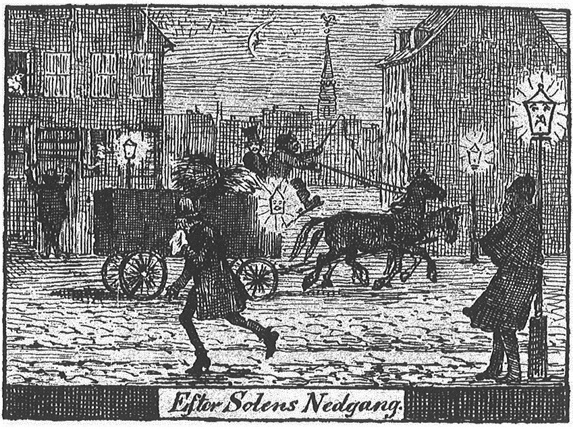
The nightman’s cart in transit through the city streets
Unknown artist. Photo: Copenhagen Museum